What are the main types of house exterior styles?
Common house exterior styles in North America include Craftsman, Colonial, Cape Cod, Ranch, Victorian, Tudor, Mediterranean, Mid-Century Modern, Contemporary and Modern Farmhouse. Each is told apart by its roof, its wall materials and its colors; the table below sets them side by side, with where each is most often found.
The styles side by side
| Style | Typical materials | Typical colors | Roof | Where it is common |
|---|---|---|---|---|
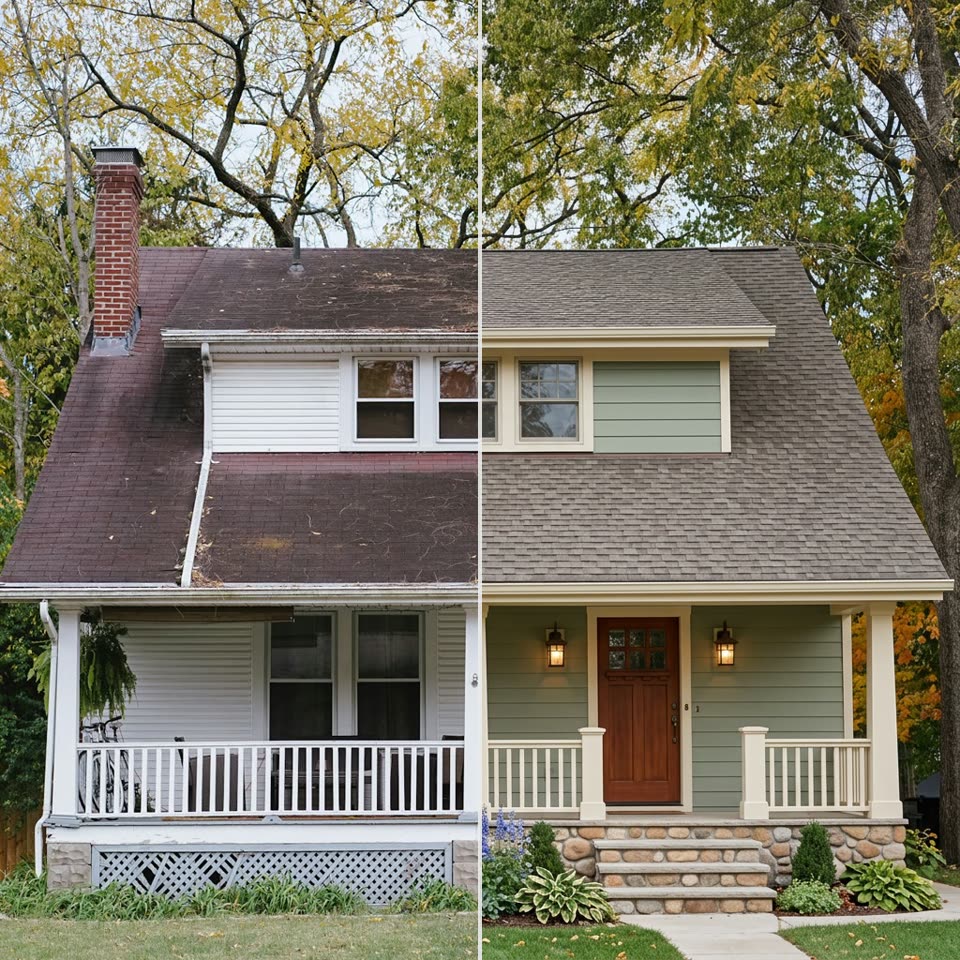
| Craftsman | Wood lap siding or shingles; stone or brick piers under tapered porch columns | Earthy greens, browns and tans, with contrasting trim | Low-pitched gables, wide eaves, exposed rafter ends | Across the US; built mostly from about 1900 to 1930, and widely revived in new houses |
| Colonial | Clapboard or brick; a symmetrical front with multi-pane windows and shutters | White, cream, grey or red brick, with black or dark green shutters | Side-gabled; a gambrel roof on the Dutch Colonial | The US East Coast, New England in particular; Colonial Revival houses across the US |
| Cape Cod | Cedar shingles or clapboard; one and a half storeys | White, grey and muted blues | Steep side gables, often with dormers | New England first; built widely in US suburbs from the 1930s to the 1950s |
| Ranch | Brick, wood or stucco; one storey, long and low | Earth tones and neutrals | Low-pitched hip or gable, wide eaves | US suburbs, built in large numbers from the 1940s to the 1970s |
| Victorian (Queen Anne) | Wood clapboard with decorative shingles, ornate trim, wraparound porches | Several contrasting colors on one house | Steep and irregular, with many gables and often a turret | The US and the UK; built in the late 19th century |
| Tudor Revival | Brick and stucco with decorative half-timbering; tall chimneys | Dark timber on light render; red brick | Steep, cross-gabled | Suburbs in the UK and the US, mostly from about 1890 to 1940 |
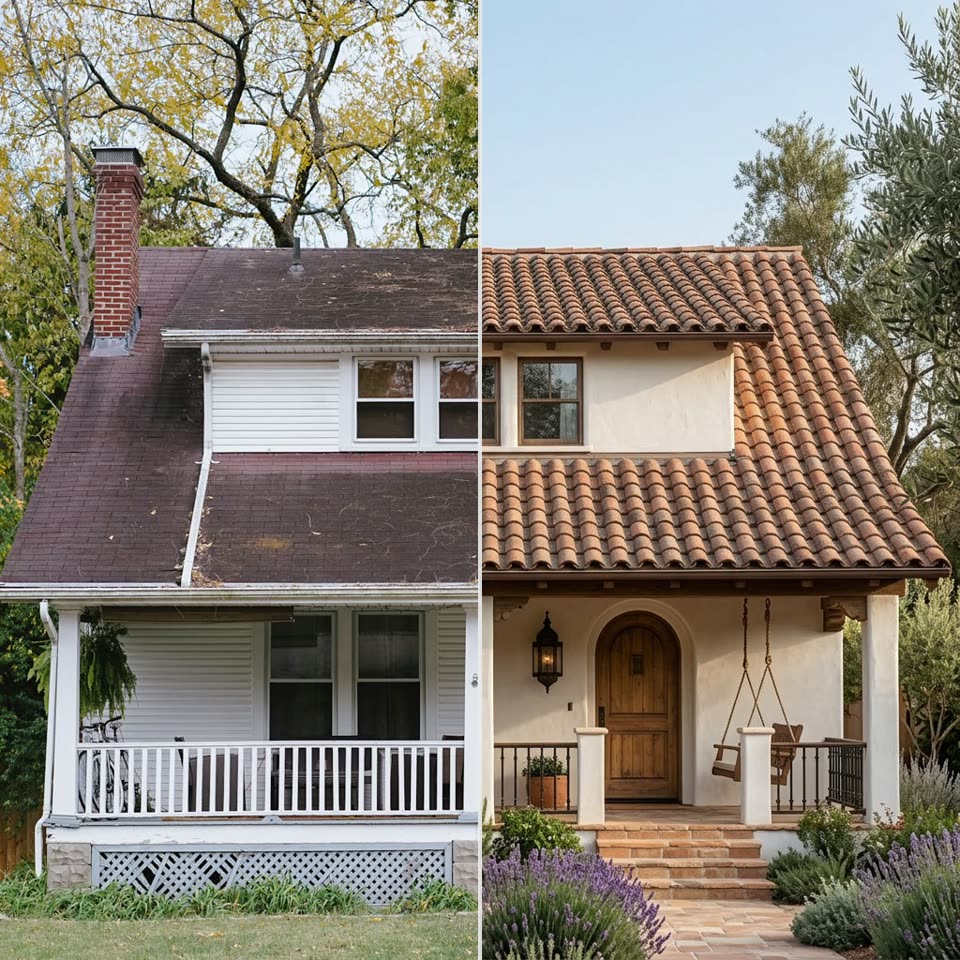
| Mediterranean / Spanish Revival | Stucco walls, arches, wrought iron | White or warm earth tones | Low-pitched, red clay tiles | California, Florida and the US Southwest; around the Mediterranean |
| Hacienda | Thick stucco or adobe walls, carved wooden doors, wrought-iron grilles, painted Talavera tiles | Warm white or earth tones, with terracotta and dark wood | Low-pitched, red clay tiles | Mexico and the US Southwest; ranch and colonial houses from the 17th to the 19th century, and revivals since |
| Mid-Century Modern | Large windows, wood, brick or stone; post-and-beam structure | Warm wood and earth tones, often a bright front door | Flat or low-pitched, wide overhangs | The US, California in particular; built from the mid-1940s to the late 1960s |
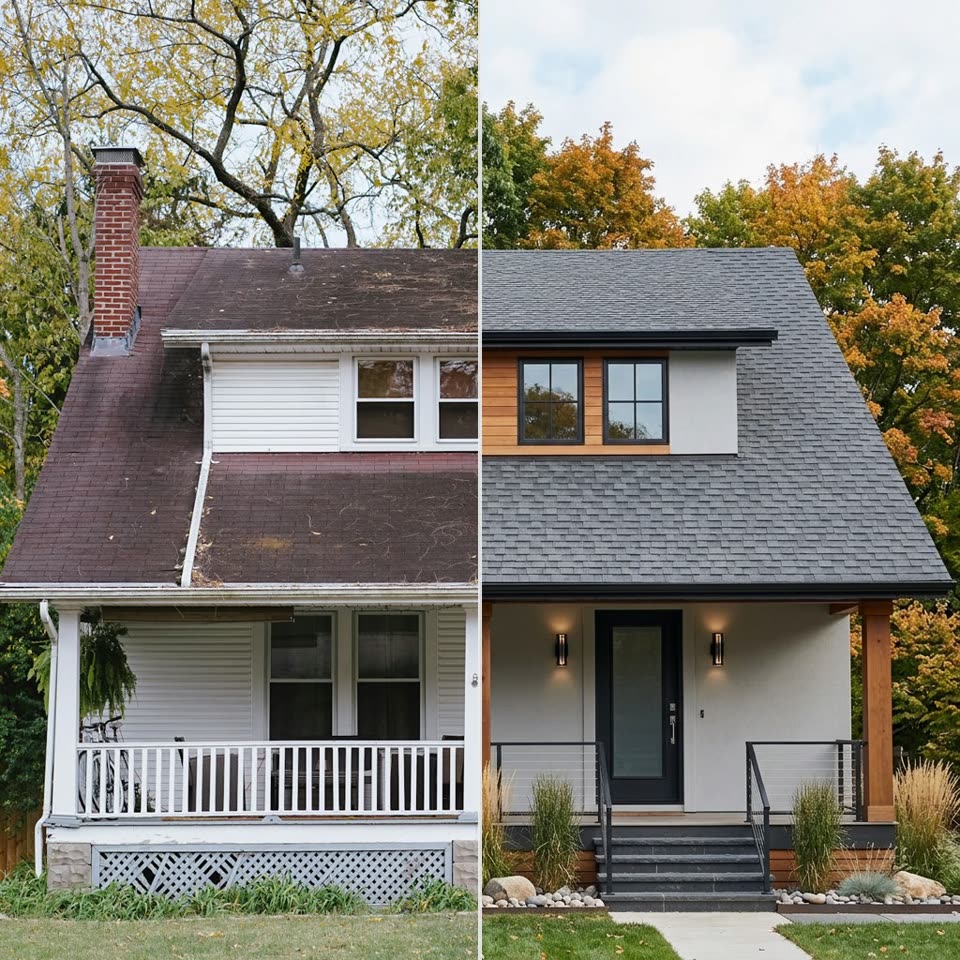
| Contemporary | Smooth render, wood or fiber cement cladding, large panes of glass | White, greys and black, with natural wood | Flat, shed or low-pitched | New houses in many countries |
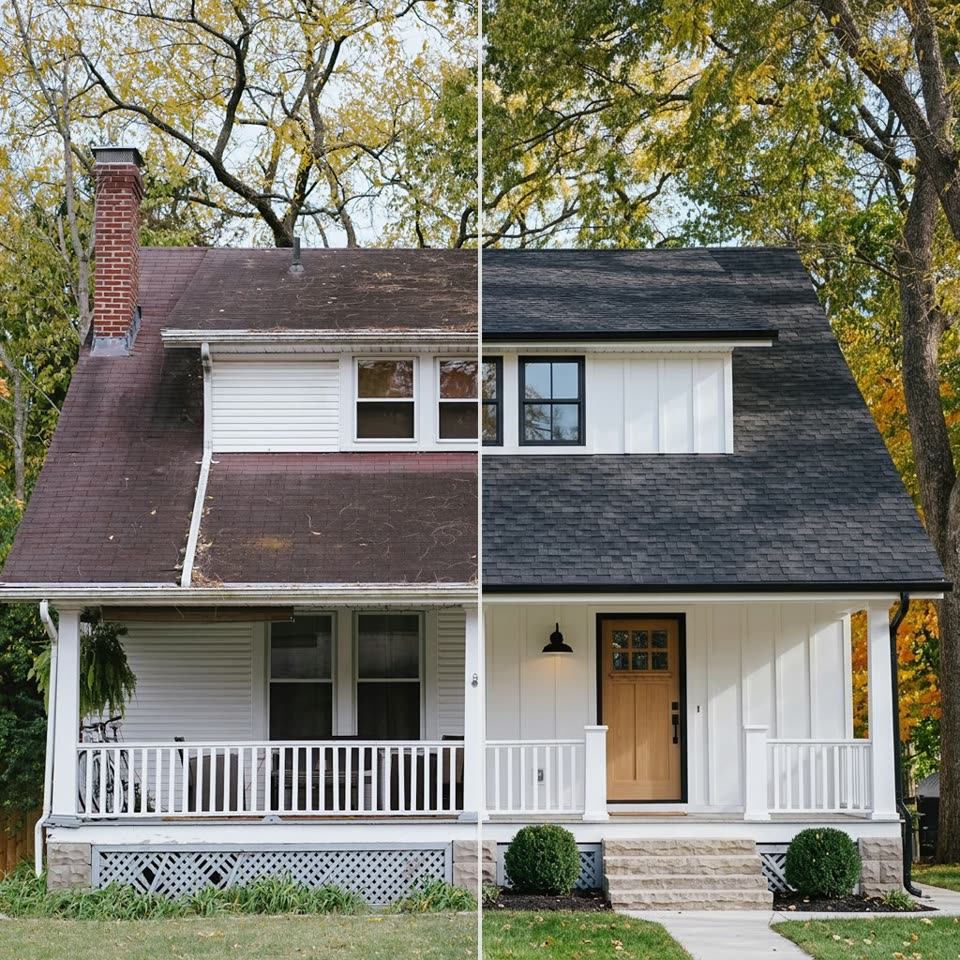
| Modern Farmhouse | Board-and-batten or lap siding, metal accents, a deep front porch | White walls, black windows and trim, a wood door | Steep gables, often standing-seam metal | New houses across the US, popular since the 2010s |
| Coastal / Shingle | Cedar shingles that weather to grey; white trim | Greys and whites, soft blues | Gabled, often steep | The New England coast and coastal towns across the US |
| Dark modern | Black or charcoal siding with natural wood | Black or charcoal with oak or cedar | Usually simple gables or flat | A recent color treatment for new and renovated houses rather than a historic style |
Linked styles can be tried on a photo of your own house in Afterhome.
How to tell them apart
Look at the roof first: its pitch, whether the gables face the street, and how far the eaves reach. Then the walls: shingles, clapboard, brick, stucco or render. Then the details: a deep porch with tapered columns says Craftsman, half-timbering says Tudor, red clay tiles and arches say Mediterranean, a symmetrical front with shutters says Colonial.
Many houses mix styles, and many were built in a plain version of one and dressed up later. A new siding and color scheme can move a house a long way toward another style without touching its shape.
Try a style on your own house
Six of these looks are styles in Afterhome. Photograph the front of your house and see it as a Craftsman, a Modern Farmhouse, Contemporary, Mediterranean, a Coastal Cottage or Dark & Moody. The app changes the siding, colors, trim, front door, lights and the planting at the front, and keeps the house's shape, roofline, windows and doors, so you see a style on your house rather than on someone else's. All of them are on the exterior page.
Styles to try
Updated 2026-11-25. Written by the makers of Afterhome.